

In the landscape of modern sustainability, terminology is often our first line of defense against a culture of disposability. At Paper Wings, an initiative of the Action Center for Transformation (ACT), we have made a non-negotiable, conscious choice in our vocabulary: we do not say “waste paper.” We say “discarded paper.”
This isn’t merely a semantic preference; it is a foundational philosophy. To label something as “waste” is to issue a death warrant for that material—it implies that it has reached the absolute end of its usefulness and belongs in the shadows of a landfill. Conversely, to call it “discarded” is to acknowledge it as a resource that has simply been overlooked, ignored, or undervalued by a fast-paced society. To truly grasp the handcrafted products meaning in 2026, one must first understand the alchemy of upcycling: the art of taking what was cast aside and elevating it into something of higher value, both aesthetically and ethically.
The Silent Crisis: The Environmental Cost of “Disposable” Paper
It is a common misconception that the digital revolution solved our “paper problem.” While our screens have replaced many physical ledgers, global paper consumption remains staggering. The environmental cost of virgin paper production is an invisible weight on our planet’s shoulders.
When paper is “wasted,” it doesn’t just disappear. Millions of tons of paper end up in landfills annually. In these oxygen-starved environments, paper undergoes anaerobic decomposition. The result? The release of methane—a greenhouse gas that is roughly 25 to 80 times more potent than carbon dioxide at trapping heat in our atmosphere over a 20-year period.
Explore Our Eco-friendly Paper Products
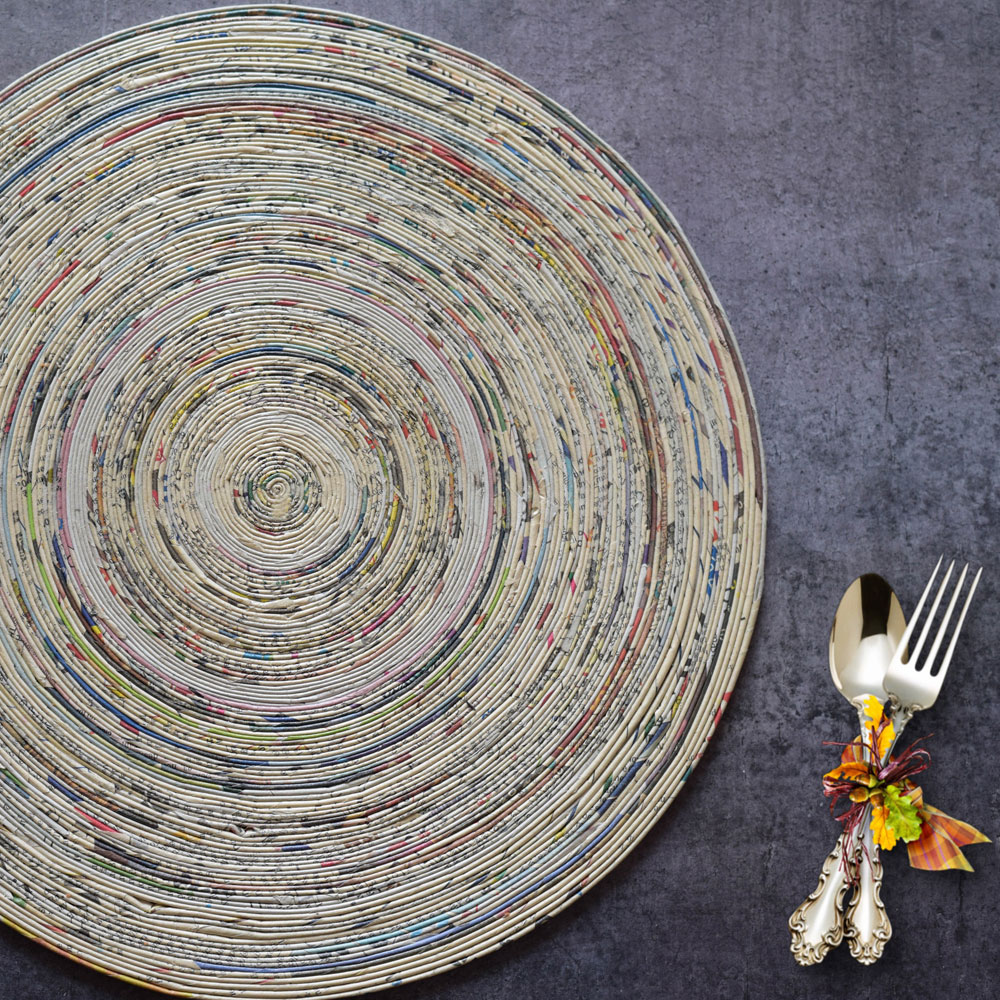


As authentic handcrafted sellers, our mission at Paper Wings is to intercept this destructive journey. We believe that every scrap of discarded paper is a “leaf” that has been separated from its tree, and through our process, we give that leaf a second, more beautiful life. By diverting this material from the landfill, we aren’t just making art; we are actively cooling the planet.
Step-by-Step: The Paper Wings Upcycling Process:
The journey from a discarded office memo to a high-end artisanal journal is a slow, meditative, and deeply scientific process. Unlike industrial recycling, which often involves heavy chemicals and high-energy machinery, our upcycling process is rooted in traditional Indian craftsmanship and environmental radicalism.
1. Ethical Sourcing: The Harvest of the Discarded
Our process begins with the collection of discarded paper from varied sources: local offices, schools, and nearby industries. By sourcing locally, we minimize the carbon footprint associated with transportation. This stage requires a keen eye for material quality, as different types of paper yield different artisanal textures.
2. Hydration & Pulping: The Return to Fiber
The discarded paper is stripped of staples and adhesives before being submerged in water. It is soaked until the bonds of the paper break down, returning it to its elemental cellulose fibers. Crucially, Paper Wings avoids the use of harsh chemical bleaches or chlorine—substances that are standard in the industrial paper world but devastating to local water tables. We preserve the integrity of the environment by working with nature, not against it.
3. Natural Dyeing: The Colors of the Earth
To achieve the sophisticated, muted tones that define the Paper Wings brand, we turn to the botanical world. We use extracts from flowers, seeds, and barks to create our dyes. This ensures that every drop of water used in our process remains non-toxic and biodegradable. From the deep indigos of the hills to the warm ochres of the sun, our colors are literally “grown” before they are applied.
4. Hand-Pressing: The Human Signature
This is where the magic happens. Each sheet of paper is formed by an artisan using a traditional mesh frame. The paper is hand-pressed to squeeze out excess moisture. This manual pressure gives our paper a unique tactile “tooth”—a subtle, irregular texture that machine-made paper can never replicate. This “tooth” is the fingerprint of the maker, a physical record of the human effort involved in its creation.
5. Crafting the Final Form: Design with Purpose
Once the sheets are dried under the Indian sun, they are handed over to our master artisans. They are transformed into journals, high-end stationery, and sophisticated handcrafted products for home decor. Every fold, every stitch, and every cut is made with the intention of creating a legacy piece—something designed to be kept, not discarded.


Quantifying the Impact: A Carbon Footprint Comparison
It is easy to talk about being “green,” but at Paper Wings, we believe in measurable impact. Traditional paper manufacturing is one of the most water-intensive industries on Earth. It takes approximately 10 liters of water to produce a single sheet of A4 paper in a standard industrial mill.
By upcycling discarded paper, Paper Wings achieves staggering conservation metrics:
- Water Usage: We reduce water consumption by up to 70% compared to virgin paper production.
- Energy Savings: Our process relies on manual labor and solar drying, reducing energy consumption by 40%.
- Tree Conservation: Every ton of upcycled paper we produce saves roughly 17 trees from being felled.
This isn’t just “greenwashing.” This is a rigorous, high-impact conservation model that proves the handcrafted products business can be a powerful engine for environmental change.
The Sensory Value: Why “Imperfection” is the New Perfection
In 2026, luxury is no longer defined by the flawless, clinical smoothness of plastic and glass. We are sensory-starved by our digital lives. There is a profound, almost spiritual beauty in the imperfection of handcrafted, upcycled paper.
When you look closely at a Paper Wings journal, you might see tiny flecks—a ghost of a printed letter from its previous life, or a fragment of a blue map. These are not “flaws.” They are the “provenance” of the material. This texture invites the user to slow down, to run their fingers across the page, and to appreciate the material’s history.
Choosing eco-friendly handcrafted products is a way to anchor yourself in the physical world. It turns the mundane act of writing a note into a ritual of mindfulness. It reminds us that we are part of a circular world where nothing is truly lost—it is only waiting to be rediscovered.
Conclusion: A Choice for the Future
The lifecycle of a leaf shouldn’t end in a dark, methane-filled landfill. It should end in your hands, transformed into a vessel for your thoughts, your plans, and your legacy. Your choice to use upcycled paper is a direct vote for a cleaner planet. It is a choice to keep a tree standing, a waterway clean, and a community of women artisans empowered.
At Paper Wings, we are proving that environmental radicalism and aesthetic excellence are not mutually exclusive. They are the twin pillars of a new, conscious way of living.
Aesthetic excellence meets environmental radicalism. Every sheet tells a story of survival and rebirth.